
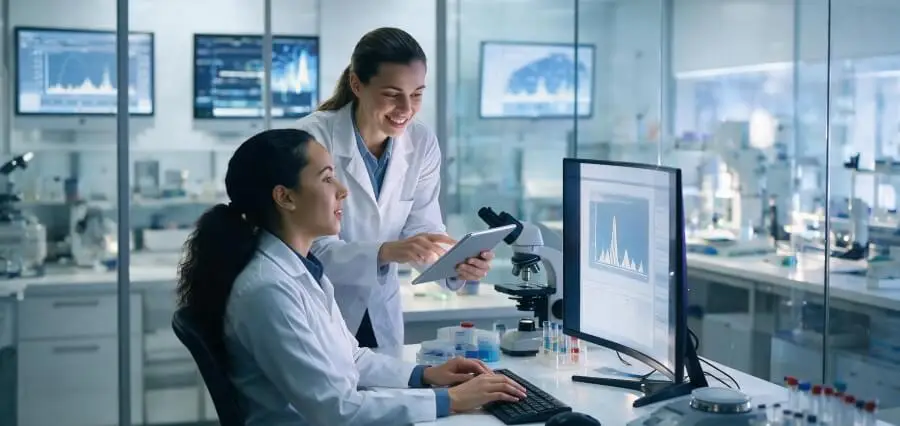





The Next Big Thing in Tech: A Glimpse into the Future
Every few years, technology takes a giant leap forward, reshaping industries, economies, and daily life. From the rise of the internet to the explosion of smartphones, each breakthrough has redefined what’s possible. Today, we’re on the cusp of another revolution, where emerging technologies like quantum computing, AI-driven automation, and bioengineering are poised to break through the noise and redefine the future. This isn’t just about incremental improvements—it’s about paradigm shifts that will transform how we live, work, and interact with the world. In this article, we’ll explore the next big tech trends that are set to dominate the coming decade, their potential impact, and how businesses and individuals can prepare for what’s coming.
Quantum Computing: The Leap Beyond Classical Limits
The Power of Qubits and Superposition
Quantum computing is no longer a distant dream—it’s becoming a reality. Unlike classical computers that rely on bits (which are either 0 or 1), quantum computers use quantum bits, or qubits, which can exist in multiple states simultaneously thanks to a principle called superposition. This allows quantum computers to process vast amounts of data at unprecedented speeds, solving problems that would take classical supercomputers centuries.
Breaking Cryptography and Beyond
One of the most immediate impacts of quantum computing will be in cryptography. Current encryption methods, like RSA, rely on the difficulty of factoring large prime numbers—a task quantum computers could make trivial. This has spurred governments and corporations to develop quantum-resistant encryption standards. But quantum computing isn’t just about breaking codes; it’s also about revolutionizing fields like drug discovery, material science, and climate modeling. For example, simulating molecular interactions at a quantum level could lead to breakthroughs in medicine, such as designing personalized drugs tailored to an individual’s genetic makeup.
Challenges and the Path Forward
Despite its promise, quantum computing is still in its infancy. Current quantum computers, like those developed by IBM, Google, and Rigetti, are prone to errors due to decoherence—the loss of quantum information as qubits interact with their environment. Researchers are working on error-correction techniques and more stable qubit designs, but widespread adoption remains years away. For now, businesses can start exploring quantum algorithms and partnering with quantum computing firms to stay ahead of the curve when the technology matures.
Artificial Intelligence and Automation: The Rise of the Machines
AI That Thinks, Learns, and Creates
Artificial Intelligence (AI) has already transformed industries from healthcare to finance, but the next wave of AI will be even more transformative. We’re moving beyond narrow AI—systems designed for specific tasks—toward artificial general intelligence (AGI), where machines can perform any intellectual task a human can. While AGI remains a distant goal, recent advancements in large language models (like me!) and generative AI are bringing us closer. These models can now generate human-like text, create art, compose music, and even write code, blurring the line between human and machine creativity.
Automation on Steroids
AI-driven automation is set to disrupt the workforce in ways we’ve only begun to imagine. Routine jobs in manufacturing, customer service, and data entry are already being automated, but the next decade will see AI take on more complex roles. For instance, AI could soon handle legal research, medical diagnostics, or even creative writing. This shift will free humans to focus on higher-order tasks, but it also raises concerns about job displacement. According to a report by McKinsey, up to 30% of work hours could be automated by 2030. The key to navigating this transition will be reskilling and upskilling the workforce to align with the new demands of an AI-powered economy.
The Ethical Dilemma: Bias, Privacy, and Control
As AI becomes more integrated into our lives, ethical concerns are coming to the forefront. AI systems can perpetuate biases present in their training data, leading to discriminatory outcomes in hiring, lending, and law enforcement. Privacy is another major issue, as AI models trained on vast datasets often use personal information without explicit consent. Governments and organizations are beginning to address these challenges through regulations like the EU’s AI Act and frameworks for responsible AI development. For businesses, adopting transparent, explainable AI systems will be crucial to maintaining trust and avoiding backlash.
Biotechnology and Longevity: Hacking the Human Body
CRISPR and Gene Editing: Writing Life’s Code
Biotechnology is undergoing a revolution, fueled by advances in gene editing, synthetic biology, and longevity research. Tools like CRISPR-Cas9 have made it possible to edit genes with unprecedented precision, offering potential cures for genetic disorders like sickle cell anemia and cystic fibrosis. Beyond medicine, gene editing is being explored in agriculture to create crops that are more resilient to climate change and pests. In the future, we may even see “designer babies,” where parents can choose specific traits for their children—a prospect that raises both ethical and social questions.
The Quest for Immortality: Extending the Human Lifespan
Longevity research is another frontier where biotechnology is making waves. Companies like Calico (a subsidiary of Alphabet) and Altos Labs are investing billions into understanding the biology of aging. Breakthroughs in senolytics (drugs that target “zombie cells” that age our bodies) and cellular reprogramming (resetting cells to a younger state) could extend human lifespans by decades. Some futurists even predict that the first person to live to 150 is already alive today. While these technologies are still experimental, they hold the promise of not just adding years to life, but life to years.
Ethical and Social Implications
The ability to manipulate life at its most fundamental level comes with profound ethical dilemmas. Who gets access to life-extending treatments? How do we prevent a divide between those who can afford longevity enhancements and those who cannot? There are also concerns about unintended consequences, such as creating new pathogens through gene editing or accelerating evolutionary changes in ecosystems. As biotechnology advances, society will need to grapple with these questions to ensure that progress benefits humanity as a whole.
Sustainable Tech: Saving the Planet with Innovation
Green Energy and the Post-Fossil Fuel Era
Climate change is one of the greatest challenges of our time, and technology is our best weapon against it. Renewable energy sources like solar, wind, and hydro are becoming more efficient and affordable, but the next big leap will come from breakthroughs in energy storage and grid management. Solid-state batteries, which promise higher energy density and safety than traditional lithium-ion batteries, could revolutionize electric vehicles and grid storage. Meanwhile, advances in nuclear fusion—long considered the “holy grail” of clean energy—are inching closer to reality. Projects like the ITER tokamak in France and private ventures like Commonwealth Fusion Systems aim to demonstrate net-energy gain from fusion within the next decade.
Carbon Capture and Climate Repair
Even with aggressive emissions reductions, we’ll need to actively remove CO₂ from the atmosphere to avoid catastrophic climate change. Technologies like direct air capture (DAC) and bio-energy with carbon capture and storage (BECCS) are gaining traction. Companies like Climeworks and Carbon Engineering are already deploying DAC plants, while BECCS integrates biomass energy with carbon sequestration. These technologies are expensive today, but scaling them up could create a new industry focused on climate repair—a crucial step toward a sustainable future.
The Circular Economy: Waste Not, Want Not
The tech industry itself is a major contributor to e-waste, with millions of tons of discarded devices ending up in landfills each year. The solution lies in the circular economy, where products are designed to be reused, repaired, or recycled. Companies like Fairphone are pioneering modular smartphones that can be easily upgraded and repaired, while others are exploring biodegradable electronics made from materials like mycelium (mushroom roots) and algae. These innovations not only reduce waste but also create new economic opportunities in recycling and refurbishment.
Neural Interfaces: Merging Human and Machine
Brain-Computer Interfaces and the New Interface
The way we interact with technology is about to change dramatically thanks to neural interfaces—devices that connect the human brain directly to computers. Elon Musk’s Neuralink and other companies are developing brain-computer interfaces (BCIs) that can restore movement for paralyzed patients, enable telepathic communication, and even enhance cognitive abilities. These devices work by implanting electrodes into the brain that read neural activity and translate it into digital signals. While still in the experimental phase, BCIs could one day allow us to control devices with our thoughts, access the internet directly through our minds, or even share memories and emotions.
Ethics and the Future of Human Identity
The integration of neural interfaces raises profound questions about identity, privacy, and autonomy. If a BCI can record and transmit thoughts, who owns that data? Could it be hacked or used for surveillance? There’s also the risk of creating a divide between those who can afford cognitive enhancements and those who cannot, leading to a new form of inequality. As these technologies develop, society will need to establish ethical frameworks to ensure they are used responsibly and equitably.
Preparing for the Future: What You Can Do Today
For Businesses: Staying Ahead of the Curve
Businesses that want to thrive in the next decade must start preparing for the tech revolution today. Here are some actionable steps:
- Invest in R&D: Allocate resources to explore emerging technologies like quantum computing, AI, and biotech. Even if these fields aren’t immediately profitable, early adoption can provide a competitive edge.
- Upskill Your Workforce: As automation and AI reshape industries, reskilling employees to work alongside these technologies will be critical. Partner with educational institutions or online platforms to offer continuous learning opportunities.
- Adopt Agile Strategies: The pace of technological change is accelerating. Businesses need to adopt agile methodologies that allow them to pivot quickly in response to new breakthroughs.
- Prioritize Ethics and Sustainability: Consumers and regulators are increasingly demanding ethical and sustainable practices. Integrate these values into your business model to build trust and avoid reputational risks.
For Individuals: Future-Proofing Your Career and Life
Individuals can also take steps to prepare for the tech-driven future:
- Develop Digital Literacy: Familiarize yourself with AI tools, data analytics, and other emerging technologies. Platforms like Coursera, Udacity, and Khan Academy offer courses to help you get started.
- Explore Interdisciplinary Learning: The most in-demand skills in the future will likely be a mix of technical and soft skills. Consider learning a combination of coding, project management, and creative thinking.
- Stay Curious: The pace of change means that today’s expertise may become obsolete tomorrow. Cultivate a mindset of lifelong learning and adaptability.
- Advocate for Ethical Tech: Support companies and policies that prioritize ethical AI, sustainability, and privacy. Your choices as a consumer and citizen can shape the direction of technological progress.
Conclusion: The Dawn of a New Era
The next big thing in technology isn’t just one breakthrough—it’s a convergence of revolutions that will redefine what it means to be human. Quantum computing will unlock problems we thought unsolvable, AI will automate and augment our lives in ways we’re only beginning to imagine, biotechnology will rewrite the rules of biology, and sustainable tech will offer a lifeline to our planet. Neural interfaces will blur the line between mind and machine, and the very fabric of our society will adapt to these changes.
This future isn’t a distant possibility; it’s unfolding now, with each breakthrough bringing us one step closer. The key to thriving in this new era will be adaptability, curiosity, and a willingness to embrace the unknown. Whether you’re a business leader, an entrepreneur, or simply someone curious about what’s next, the time to prepare is now. The next big thing isn’t coming—it’s already here.


